How to Paint Garage Walls (the Right Way)
Most garage wall paint jobs fail for the same three reasons. Here's the paint, the prep, and the process that actually lasts.
Why Garage Walls Need a Different Approach Than the Rest of Your House
A garage wall lives a harder life than any wall inside your house. It gets bumped by car doors, splashed with oil and coolant, scuffed by bike pedals and lawn equipment, and — in an Indiana winter — hit with salt-laden moisture off the car every single day. Standard interior latex paint wasn't built for any of that, which is why so many garage paint jobs look tired within a year or two.
The good news: painting a garage well isn't complicated. It just uses different products and a different prep sequence than a bedroom wall, and skipping either one is where almost every DIY job goes wrong.
Picking the Right Paint
For drywall or block garage walls, a urethane-modified acrylic or true epoxy wall paint is the standard for a reason: it resists chemicals, wipes clean, and doesn't chalk or yellow the way builder-grade latex does over a few years. Standard latex is fine for a low-use garage that's mostly storage, but if you're in the garage often — working on cars, using the space as a shop — the upgrade is worth it.
Sheen matters as much as the paint itself. Satin or semi-gloss sheds dirt and handprints far better than flat or eggshell, and it reflects more light, which matters in a room that usually has one small window and a couple of overhead bulbs.
Surface Prep — the Step Everyone Skips
Garage walls, especially block or older drywall, are usually dusty, slightly chalky, and sometimes have small oil or rust stains from years of storage. Paint applied straight over that will bond to the dust, not the wall — and it'll peel in sheets within a season. A quick degrease-and-scrub with a TSP substitute, a stain-blocking primer on any oil or rust spots, and a light sand on glossy trim is the difference between a paint job that lasts one year and one that lasts ten.
Block and poured-concrete walls need a masonry conditioner or block filler primer first — regular primer alone won't seal the porous surface and you'll be repainting within 18 months.
Color Strategy That Actually Makes the Room Better
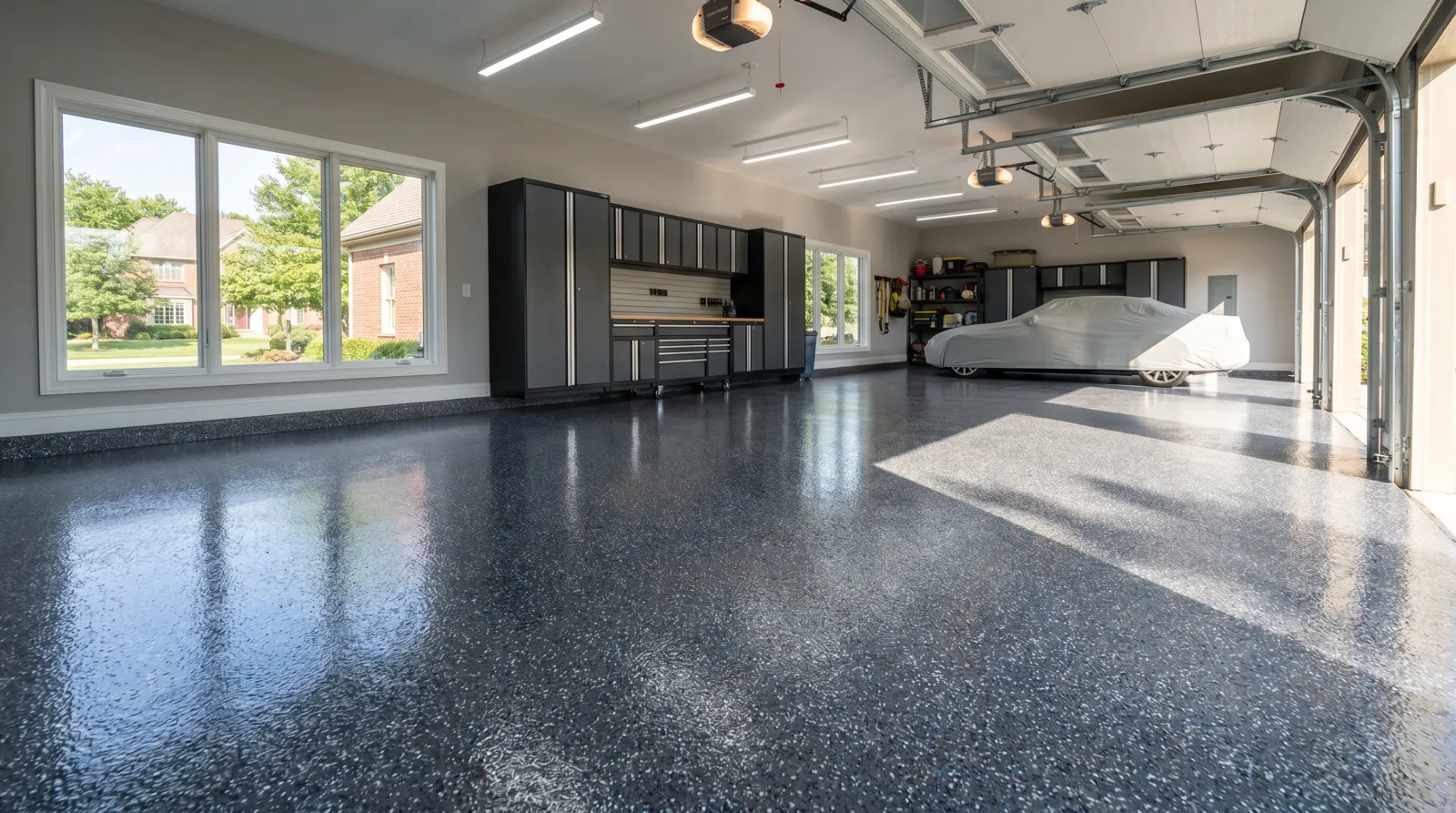
Dark charcoal and deep graphite walls are the most requested look right now because they hide scuffs beautifully and make a coated floor pop — but they also absorb light, which can make a garage feel smaller if your lighting isn't upgraded to match. A lighter warm gray or soft white does the opposite: it bounces light around and makes a two-car garage feel noticeably larger, which is why we usually recommend pairing darker walls with an LED lighting upgrade (see our lighting guide below) rather than skipping it.
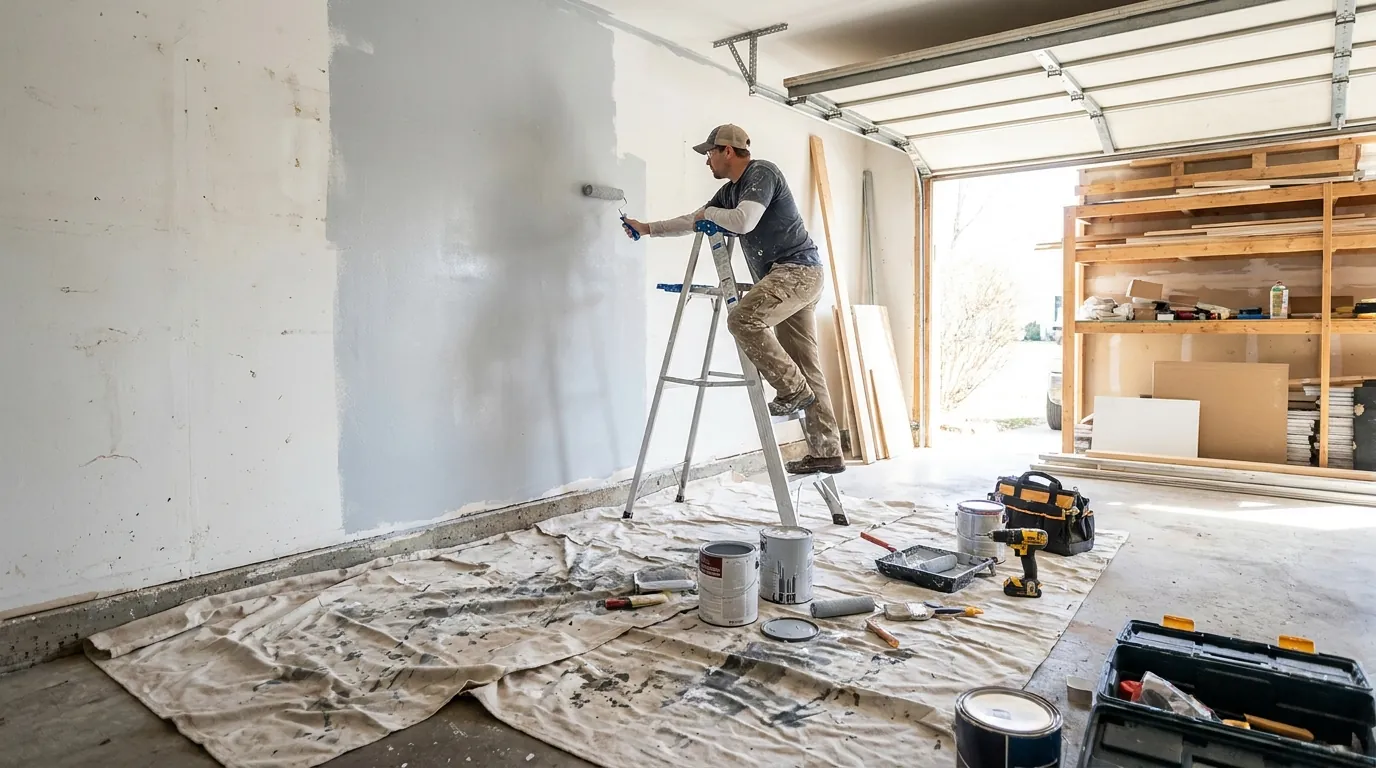
The Prep Difference
This is the step that separates a paint job that peels from one that doesn't: degreasing, patching, and priming before a single coat of color goes on. We run this exact sequence on every wall we paint, regardless of whether the floor is also being coated.
It adds a few hours to the timeline. It's also the entire reason our wall paint doesn't bubble the way a rushed weekend DIY job usually does within the first Indiana winter.
Get Free EstimateQuestions Answered
Ready to Start Your Garage Transformation?
Free on-site estimate. One quote for everything. Lifetime floor warranty included.
Get Free Estimate