Garage Flooring Options, Compared
Epoxy, polyaspartic, interlocking tile, roll-out mats, or just paint — here's how the real options actually compare for an Indiana garage.
Five Real Options, Not Just One
Search "garage flooring options" and most results push straight to epoxy, which is a great system — but it isn't the only one, and it isn't right for every situation or budget. Interlocking tile, polyaspartic coatings, roll-out mats, and simple concrete paint all have real, legitimate use cases depending on your garage, your budget, and how you use the space.
This is a straight, no-sales-pitch comparison of all five, so you can see where each one actually fits before deciding.
Epoxy Coating
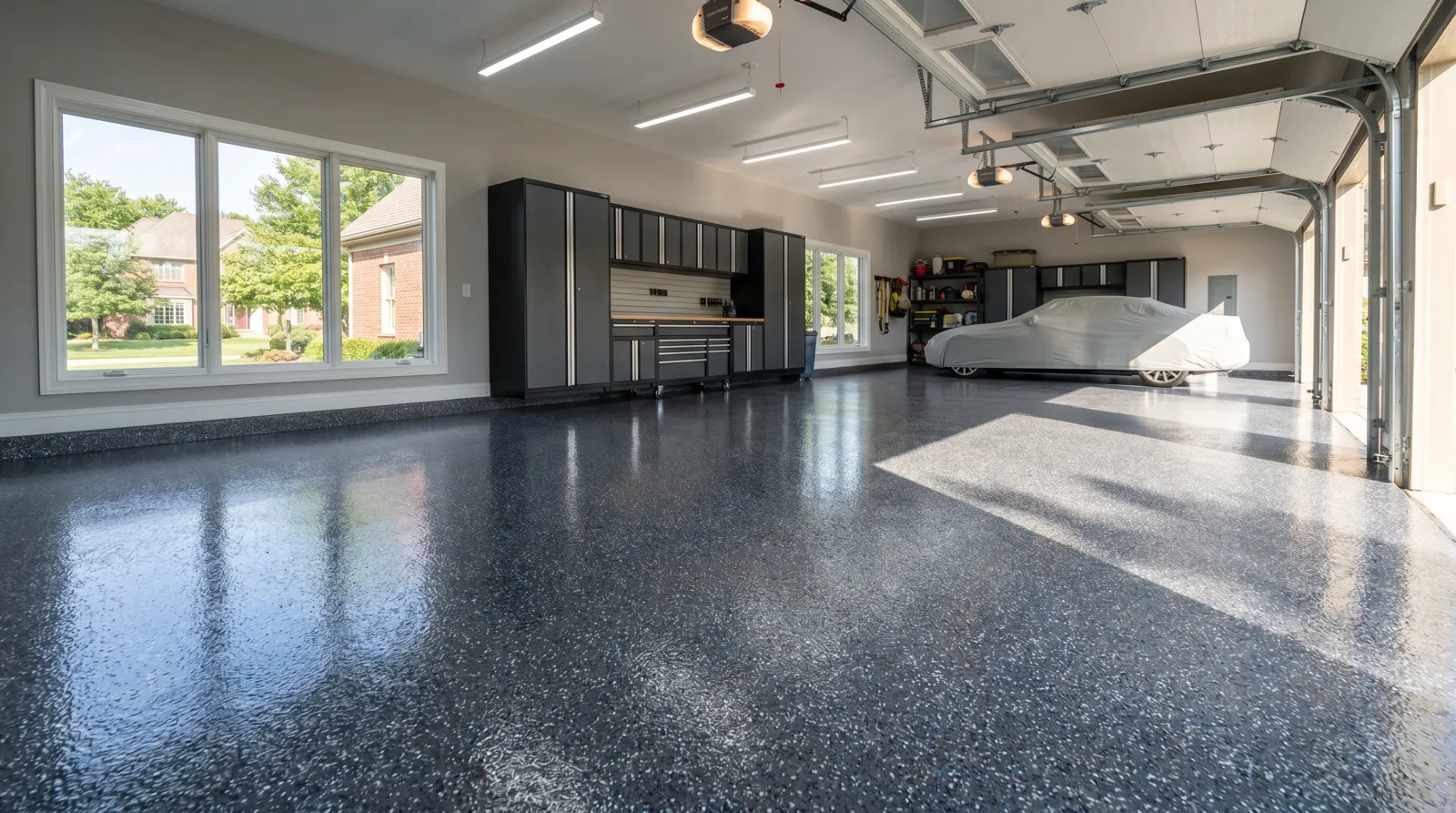
The most popular upgrade for a reason: a seamless, glossy, chemical-resistant surface that transforms how a garage looks and feels, with a lifespan of 10-20+ years when installed with proper diamond-ground surface prep. Best for homeowners who want a permanent, showroom-quality floor and are staying in the home long-term.
Cost: roughly $2,500–$6,000 for a two-car garage, professionally installed. See our full epoxy flooring guide for details.
Polyaspartic Coating
A faster-curing, more UV-stable cousin of epoxy — walk-ready in 24-48 hours instead of a week, and it won't amber or yellow in direct sun the way some epoxy topcoats can over time. Costs 15-25% more than standard epoxy but is the stronger long-term choice for sun-facing garages or homeowners who can't be without their garage for long. See our polyaspartic coatings guide.
Interlocking Tile
PVC or rubber tiles that snap together over existing concrete — no grinding, no cure time, fully removable if you move or want to change the look. The tradeoff is a visible seam pattern and a shorter realistic lifespan (5-10 years of heavy use) compared to a bonded coating. Best for renters, temporary setups, or anyone who wants zero downtime installation.
Roll-Out Mats
The lowest-cost, fastest option — large rubber or PVC rolls laid directly over concrete. Good for basic protection and a quick visual upgrade, but they shift over time, trap dirt underneath, and don't offer the chemical or hot-tire resistance a bonded coating does. Reasonable as a budget stopgap, not a long-term flooring solution.
Paint-Only (Concrete Paint)
The cheapest true option, but also the shortest-lived — concrete paint (not a true epoxy system) typically shows tire marks, peeling, and hot-tire pickup within 1-2 years without the diamond-ground prep and multi-layer system a real coating uses. It's a reasonable very-short-term fix, not a lasting one.
How We Help You Choose
During a free estimate, we walk your specific garage — slab condition, moisture levels, how you use the space — and give you an honest recommendation, even if that means a lower-cost system than our premium offering.
Most homeowners land on epoxy or polyaspartic once they see the difference in person, but we'll never talk you into more than your garage actually needs.
Get Free EstimateQuestions Answered
Ready to Start Your Garage Transformation?
Free on-site estimate. One quote for everything. Lifetime floor warranty included.
Get Free Estimate