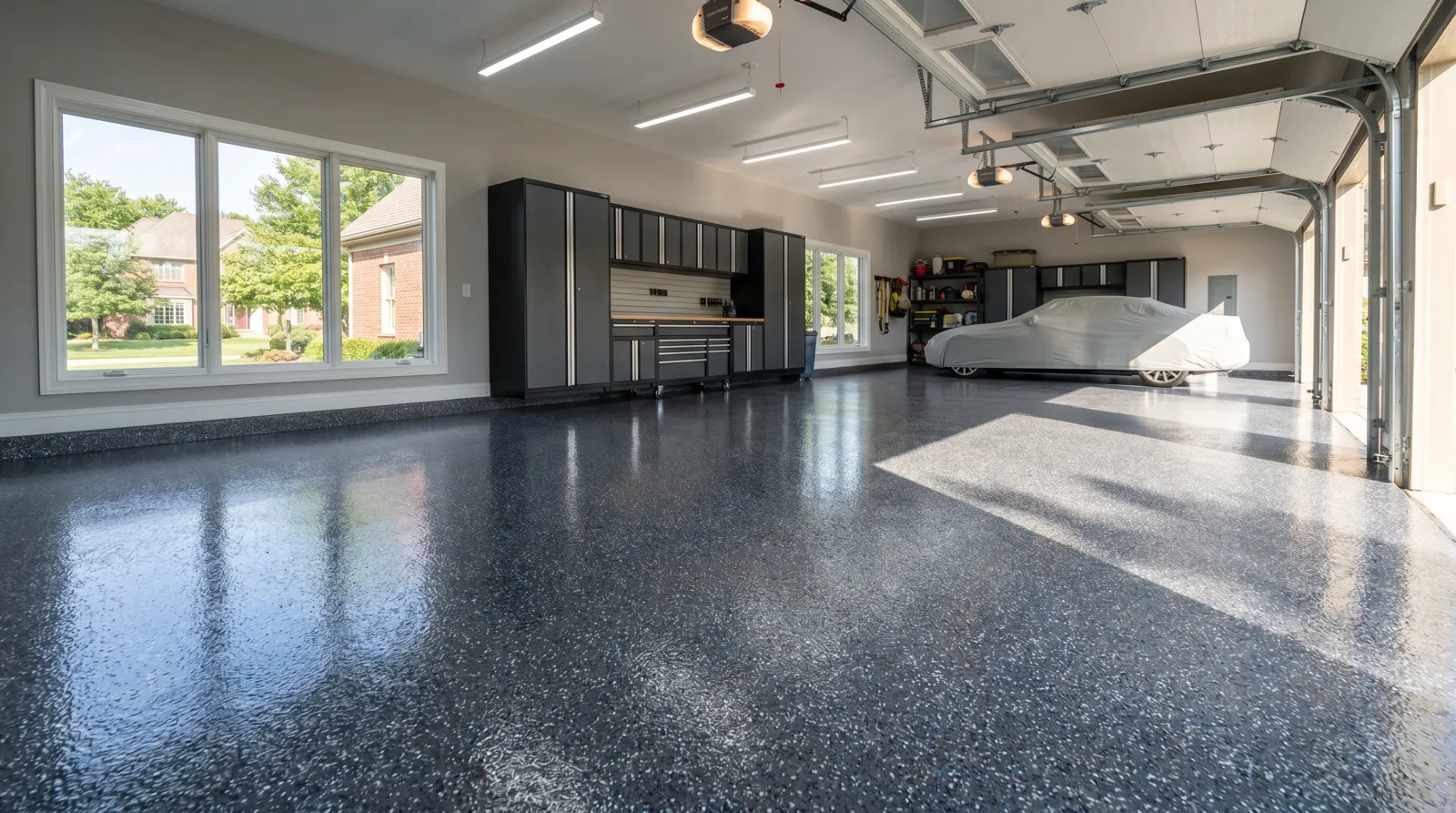
Garage Door Painting & Refinishing Guide
A new garage door runs $1,500–$4,000+. A professional repaint runs a fraction of that — and can look just as sharp if it's done right.
Repaint or Replace? Most Doors Don't Need Replacing
The garage door is one of the biggest visual elements on the front of an Indiana home — and one of the most commonly replaced when a simple repaint would have solved the problem. Unless the panels are dented, the springs are failing, or the insulation is shot, a professional-grade repaint gets you 90% of the curb-appeal upgrade at a fraction of the cost of a new door.
The catch is that garage doors take more direct sun and weather exposure than almost any other painted surface on the house, so the paint and prep have to be right or you're repainting again in two summers.
Prep by Material
Steel doors need any rust spots ground back to bare metal and treated with a rust-inhibiting primer before color goes on, or the rust will bubble back through within a year. Wood doors need any checking or cracking filled and sanded smooth, plus a stain-blocking primer if there's existing water staining. Fiberglass doors generally need the least prep — a scuff-sand and clean is often enough — but require a paint formulated for fiberglass flex, or standard paint will crack at the panel seams.
Color Choices That Boost Curb Appeal
Deep charcoal, black, and dark bronze tones are the most requested garage door colors right now, especially paired with a lighter home exterior — they read as intentional and modern rather than just 'the garage.' If your door faces direct south or west sun for most of the day, a darker color will run hotter and may accelerate wear on rubber weatherstripping, which is worth factoring in if you're also updating the seals.
While You're At It: Hardware & Weatherstripping
A repaint is the ideal time to replace worn bottom weatherstripping and check the door's hardware — hinges, rollers, and the opener's travel limits. New weatherstripping alone noticeably cuts drafts and the gap where leaves, dust, and cold air get into the garage, and it's a small add-on cost next to a repaint that's already scheduled.
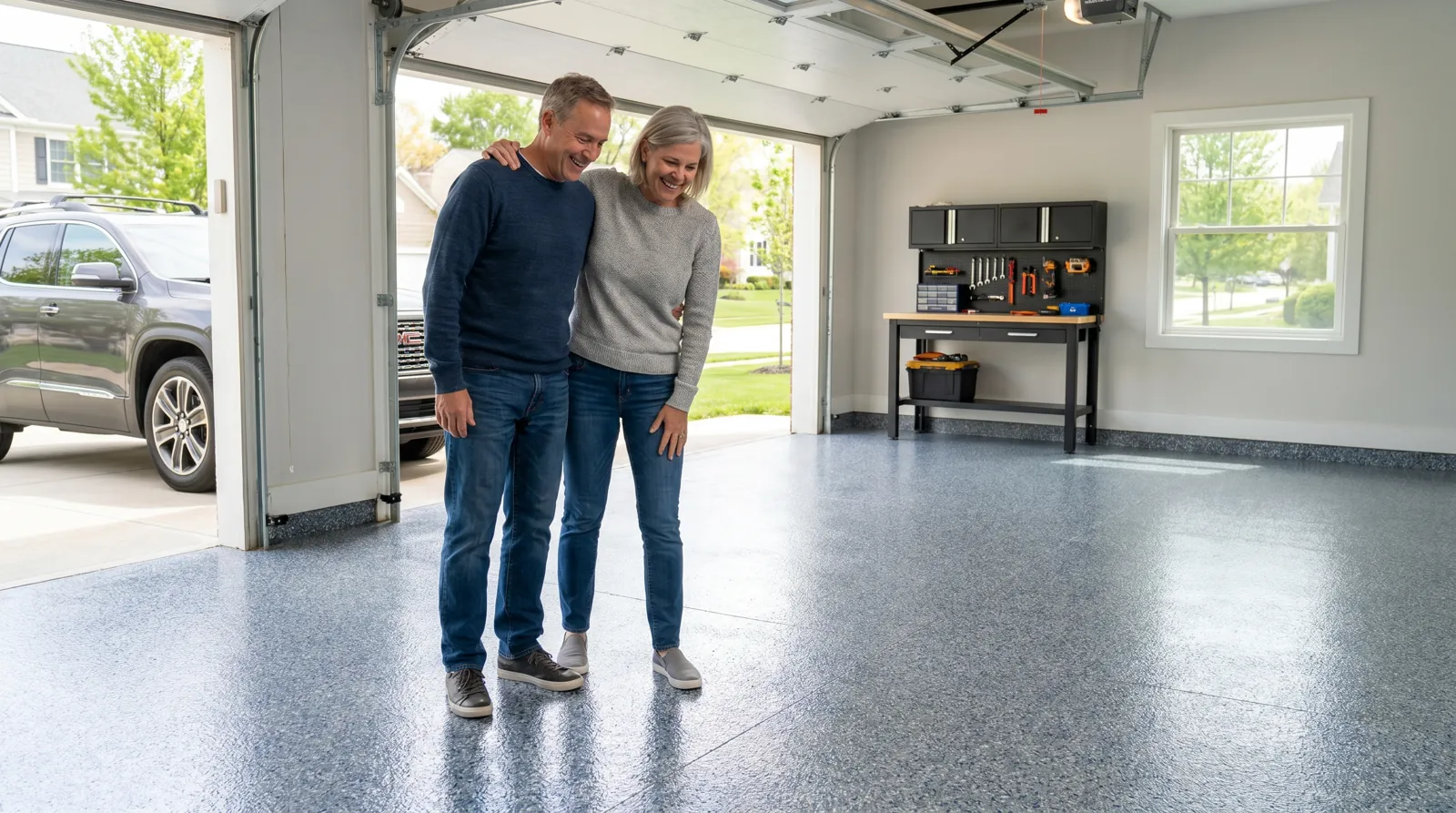
Why DIY Garage Door Paint Jobs Peel Early
The most common failure point is painting straight over chalky, sun-degraded factory paint without a scuff-sand first — the new coat never actually bonds. The second most common is using an interior-grade paint that isn't rated for the constant expansion and contraction a south-facing steel door goes through.
Both are avoidable with the right prep sequence and an exterior-rated product matched to the door's material.
Get Free EstimateQuestions Answered
Ready to Start Your Garage Transformation?
Free on-site estimate. One quote for everything. Lifetime floor warranty included.
Get Free Estimate