EV Charger Garage Installation: What to Know First
Adding a home EV charger is one of the most common reasons Indiana homeowners are finally getting their garage finished, too. Here's how to plan it right.
Why EV Chargers Are Driving a Wave of Garage Upgrades
A home EV charger is one of the most requested electrical upgrades in Indiana right now — and it's turning out to be the moment a lot of homeowners finally address the rest of the garage too. Once an electrician is out running a dedicated circuit, it's the natural time to also fix a stained floor, add real lighting, or finish walls that have needed attention for years.
This guide isn't an electrical how-to (that's licensed electrician territory) — it's what to think through around the charger install so the rest of the garage ends up finished, not half-done next to a brand-new charger on an old concrete floor.
Panel Capacity Comes First
Before anything else, a licensed electrician needs to confirm your home's electrical panel has capacity for a Level 2 charger circuit — typically a dedicated 40-50 amp, 240V circuit. Older Indiana homes with 100-amp service sometimes need a panel upgrade first, which is worth confirming early since it affects timeline and budget for the whole project.
Placement Affects Everything Else
Charger placement determines where conduit runs, where the mounting wall needs to be finished (painted, patched, ready to mount hardware into), and how much floor space stays clear for parking. Planning charger placement alongside any wall painting or storage installation avoids finishing a wall and then cutting into it for conduit a month later.
The Floor Underneath Matters More Than People Expect
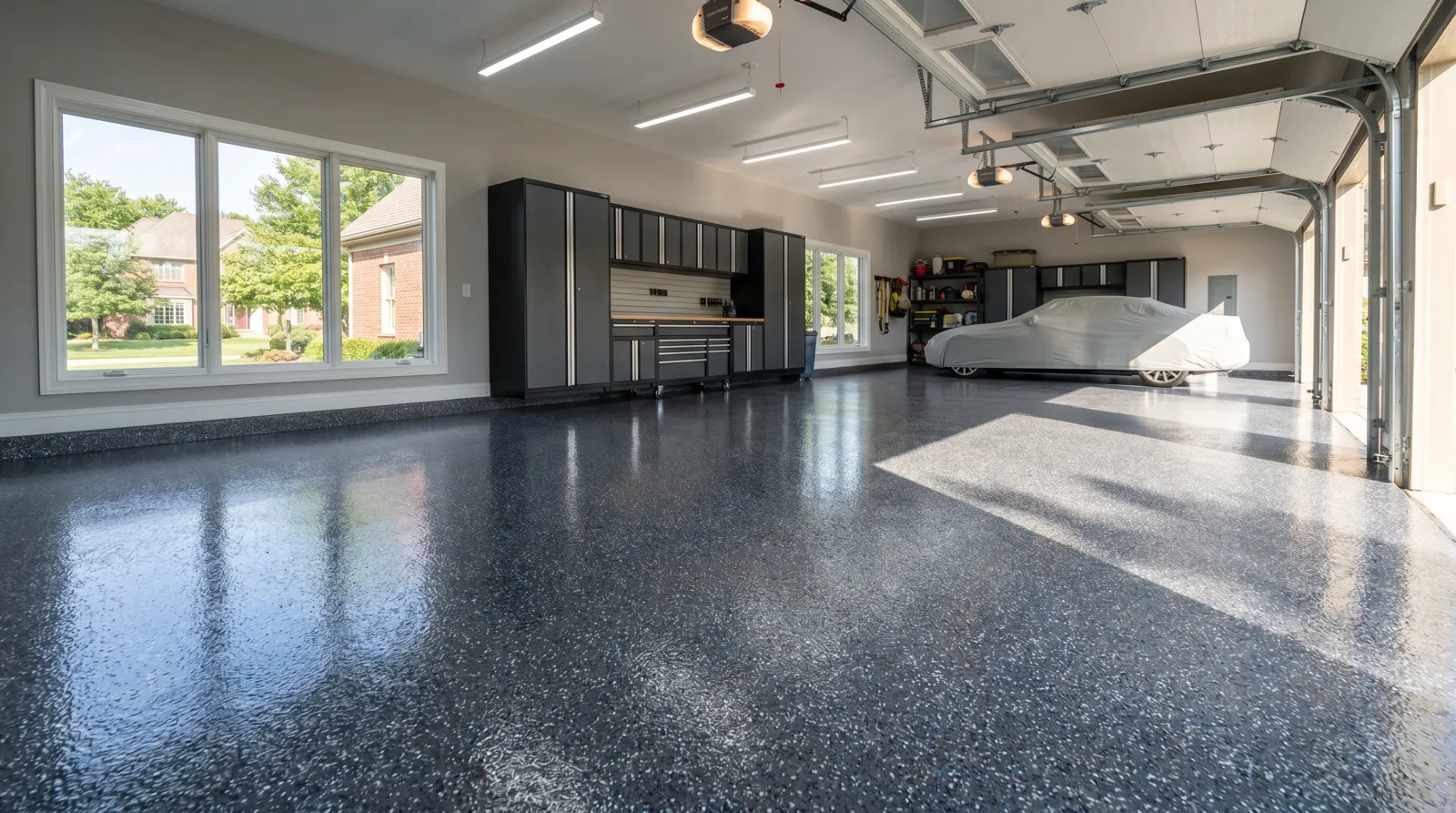
An EV charging spot sees the same car parked in the same exact spot, day after day — any existing oil stains, cracks, or moisture issues under that spot become more visible and more likely to worsen with consistent traffic. It's a natural moment to consider a floor coating: a diamond-ground epoxy or polyaspartic system handles regular EV charging traffic without issue and looks finished next to a new charger, instead of dated concrete next to modern hardware.
Sequencing the Full Project
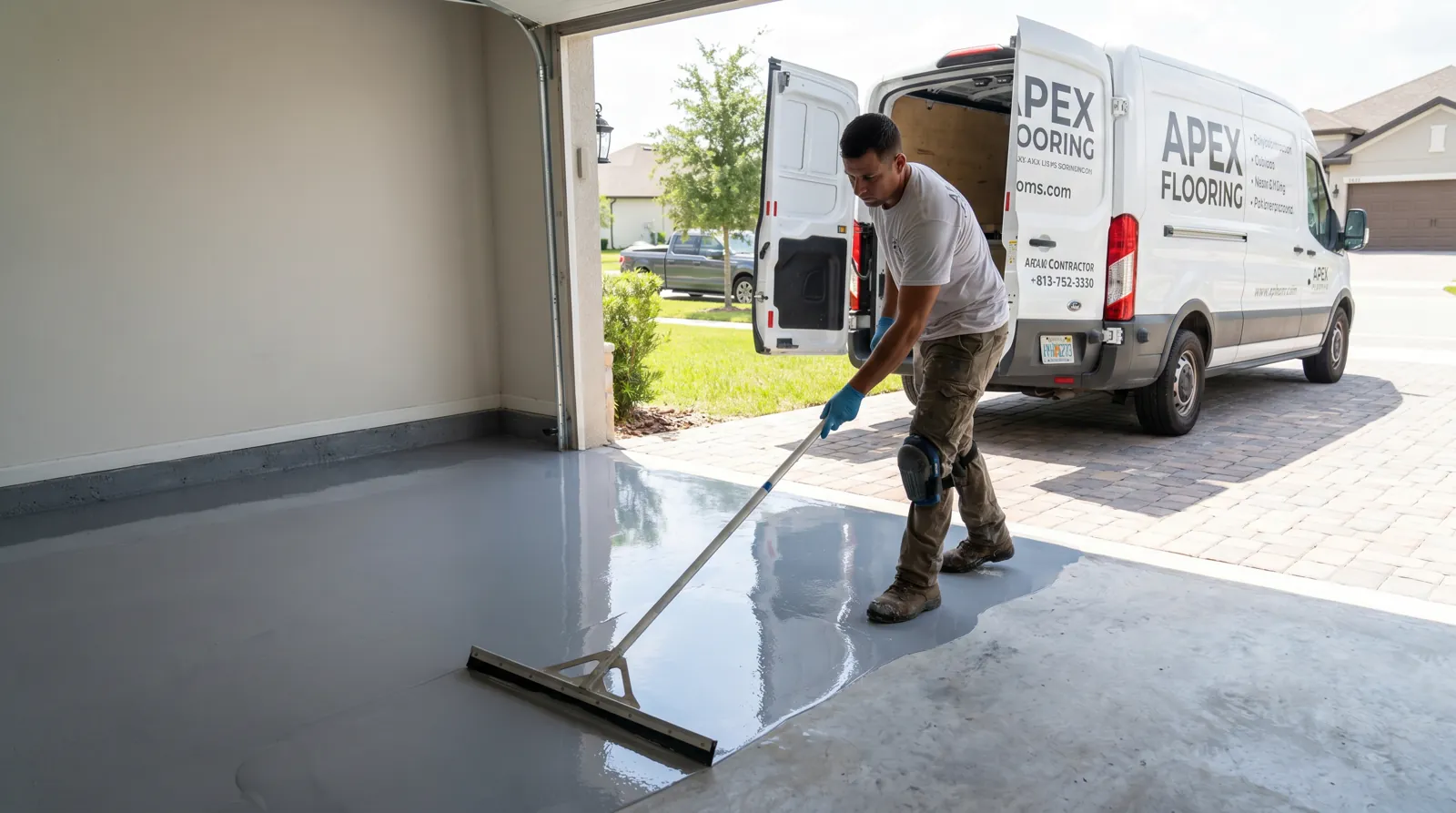
The cleanest order for a combined project: electrical rough-in and panel work first, then wall patch/paint, then floor coating last (so the finished floor isn't walked on during the messier electrical and wall work), then charger mounting once the wall paint has cured. We coordinate around your electrician's timeline for any combined remodel project.
We Handle the Garage — Not the Electrical
We're not electricians, and we won't pretend to be — the charger circuit and panel work need a licensed electrician. What we do is make sure the floor, walls, and storage around it are finished to match, on a timeline that works with your electrician's schedule.
Ask us during your free estimate and we can help sequence the full project, electrician included, so nothing gets finished out of order.
Get Free EstimateQuestions Answered
Ready to Start Your Garage Transformation?
Free on-site estimate. One quote for everything. Lifetime floor warranty included.
Get Free Estimate