Garage Cabinets Buying Guide
The material matters more than the finish. Here's what actually holds up in an unconditioned Indiana garage, and what to skip.
Why Garage Cabinets Aren't the Same as Kitchen Cabinets
A garage isn't climate-controlled the way the rest of the house is, which means cabinets there deal with humidity swings, temperature extremes, and often direct contact with anything spilled or dripped from a car. Cabinets built for a kitchen — even 'garage-marketed' versions of the same laminate boxes — can warp, swell, or delaminate within a few years in that environment if the material isn't rated for it.
The three materials on the market are steel, MDF/laminate, and plywood, and each has a real trade-off worth understanding before you buy.
Steel vs. MDF/Laminate vs. Plywood
Powder-coated steel cabinets are the most durable option for Indiana garages — they don't absorb moisture, don't warp, and shrug off dents better than most homeowners expect. They cost more per linear foot but typically outlast the other two materials by a wide margin.
MDF/laminate cabinets are the most affordable and come in the widest range of finishes, but they're the most vulnerable to moisture — a leaking hose bib or a wet coat left too long against the door can cause swelling that doesn't reverse. They're a reasonable choice for a dry, attached garage but a risk in anything prone to dampness.
Plywood cabinets split the difference — better moisture resistance than MDF, lighter and often cheaper than steel, though the finish quality varies more by builder.
Wall-Mounted vs. Floor vs. Base-and-Upper Combo
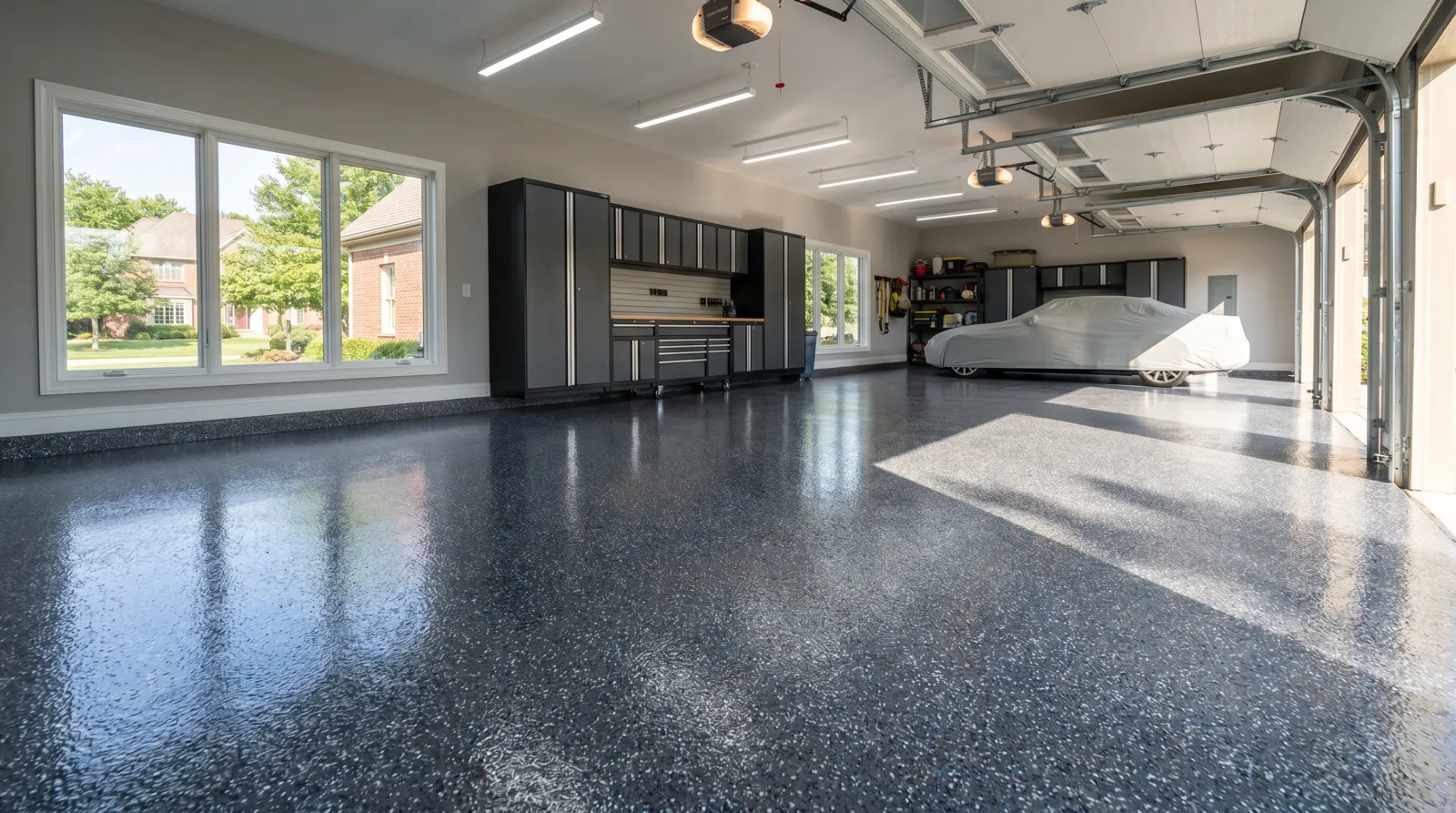
Wall-mounted cabinets keep the floor completely clear for parking, cleaning, or a coated floor to shine — but they're limited in weight capacity and depth. Floor cabinets hold more and can handle heavier items (paint cans, bulk supplies) but eat into usable floor space. A base-and-upper combo, the way kitchens are typically laid out, gives you the best of both and is the most requested setup for garages doubling as a workshop.
What Actually Matters When You're Shopping
Weight capacity per shelf, not just overall cabinet weight, is the spec that trips people up — a cabinet rated for 200 lbs total might only support 40 lbs per shelf, which matters if you're storing anything dense like paint cans or tools. Full-extension drawer slides and adjustable shelving are worth paying extra for; fixed shelves rarely fit what you actually need to store.
Measured and Designed to Fit — Not a Generic Kit
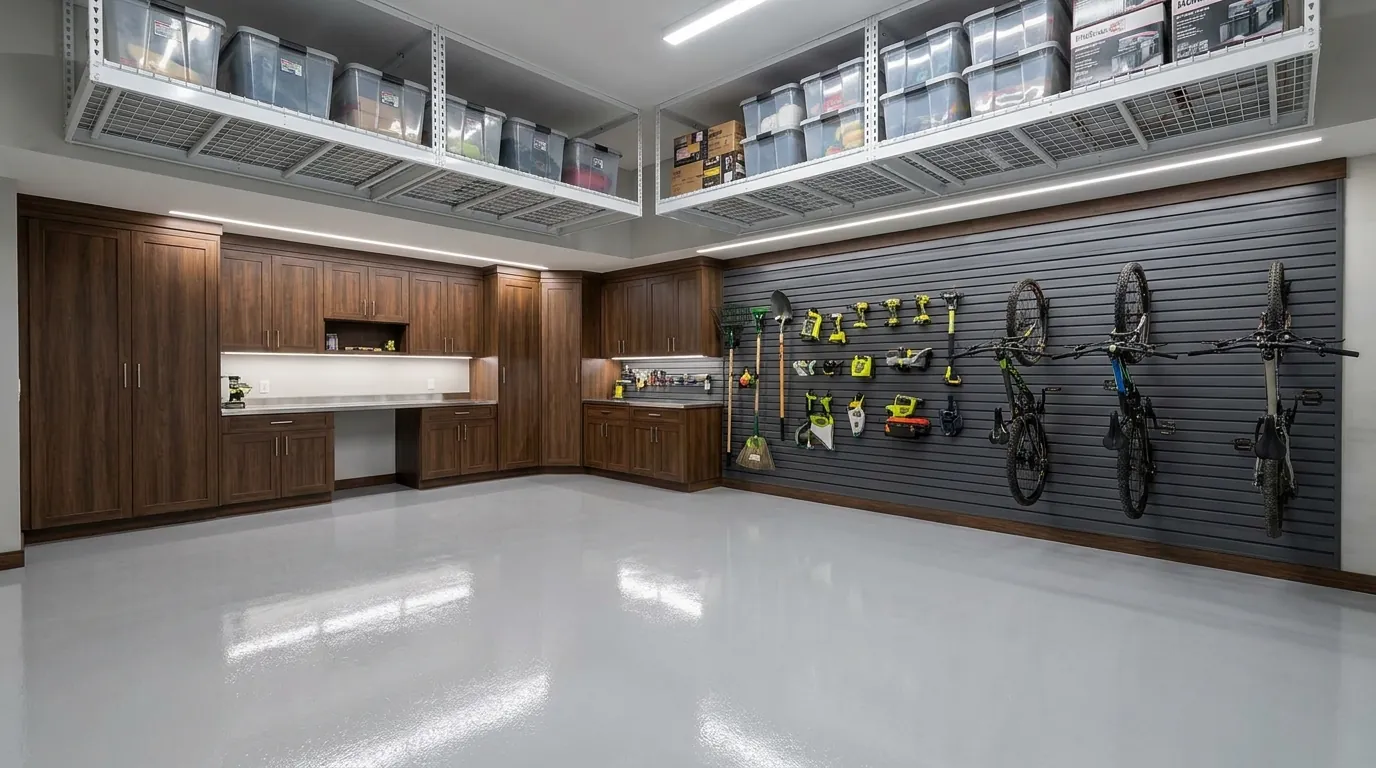
Off-the-shelf cabinet kits rarely use a garage's wall space efficiently around windows, outlets, and the garage door track. We measure the full wall run and design cabinet placement around it, so nothing gets awkwardly cut short or leaves dead space.
It's the difference between cabinets that look built-in and cabinets that look dropped in.
Get Free EstimateQuestions Answered
Ready to Start Your Garage Transformation?
Free on-site estimate. One quote for everything. Lifetime floor warranty included.
Get Free Estimate